







OMU Hosts Third Course and Symposium on Diagnostic Strategies in Neuromuscular Diseases
 LISTEN

Bringing together experts, clinicians, researchers, and early-career physicians from Türkiye and abroad, the program combines theoretical instruction, hands-on EMG training, case discussions, and current advances in neuromuscular medicine.
The Third Course and Symposium on Diagnostic Strategies in Neuromuscular Diseases, hosted by the Ondokuz Mayıs University (OMU) Faculty of Medicine, has brought together experts, experienced clinicians, researchers, and early-career physicians from Türkiye and abroad to share knowledge, clinical experience, and current scientific developments in neuromuscular medicine.
Following the first two meetings, which were organized in a course format, this year’s program has been expanded to include a symposium, bringing theoretical education, hands-on learning, and current scientific discussion together within a single event.
The opening was attended by Prof. Dr. Murat Danacı, Dean of the OMU Faculty of Medicine; Prof. Dr. Aysun Soysal, President of the Turkish Clinical Neurophysiology EEG-EMG Association; Symposium Chair Prof. Dr. Hacer Erdem Tilki; academics, clinicians, and early-career physicians.
Dean Danacı Highlights OMU’s Institutional Development
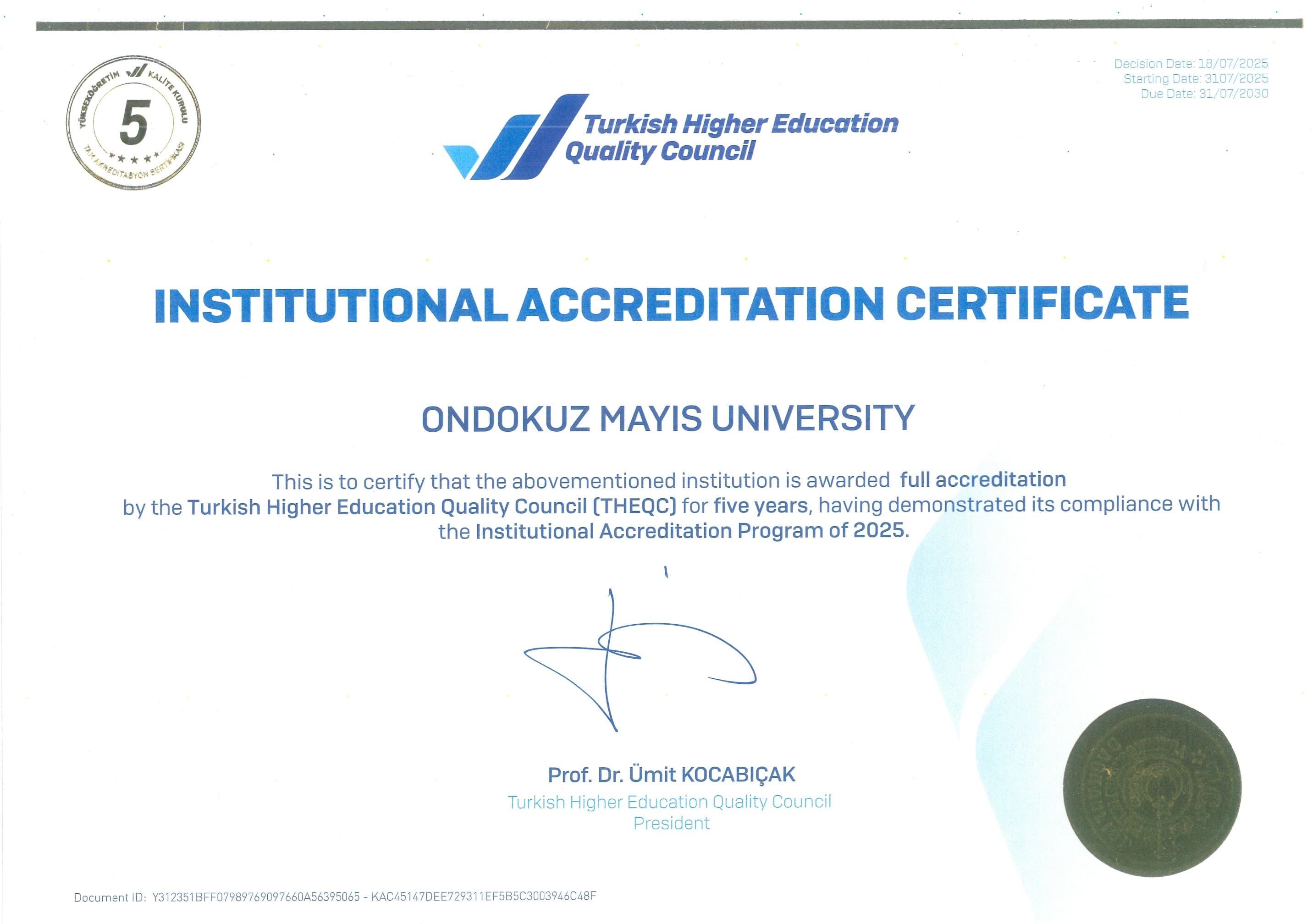
In his opening remarks, OMU Faculty of Medicine Dean Prof. Dr. Murat Danacı reflected on the University’s institutional development over more than half a century and highlighted its accreditation achievements.
“We have now passed our 50th anniversary and have become a university with more than half a century of experience,” Danacı said.
He noted that OMU is one of the largest and most established universities in the Central and Eastern Black Sea Region and emphasized the progress made in institutional and academic accreditation.
“Both the Turkish- and English-medium programs of our Faculty of Medicine have six-year accreditation, and approximately eight of our departments are currently accredited,” he said. “Coincidentally, the accreditation team for our Department of Neurology was also here yesterday.”
Danacı also reflected on his own long-standing connection with OMU.
“I was among the group that received training at the first hospital here in 1984,” he said. “When I look at how far Ondokuz Mayıs University has come over these 50 years, I can see that it is moving rapidly toward a very strong position.”
He thanked everyone involved in organizing the event and expressed his belief that the program would make a valuable contribution to the neurology community and all participants.
Prof. Dr. Soysal: “Regional Courses Are Extremely Important for Clinical Neurophysiology Education”
Prof. Dr. Aysun Soysal, President of the Turkish Clinical Neurophysiology EEG-EMG Association, emphasized the importance of regional training programs for continuing professional development.
“We have always placed great importance on regional courses,” Soysal said. “We initially began these activities in the earthquake-affected region and subsequently organized regional courses in many parts of Türkiye.”
She said such programs offer important opportunities both for experienced professionals seeking to update their knowledge and for those who are relatively new to the field.
“These courses are extremely valuable both for helping colleagues update their knowledge and for enabling those who are new to the field to address gaps in their training,” she said.
Soysal expressed her hope that regional courses would continue to contribute to education throughout the clinical neurophysiology community.
Prof. Dr. Tilki: “The True Owners of a Scientific Meeting Are Those Who Need It”
Symposium Chair Prof. Dr. Hacer Erdem Tilki reflected on the origins and development of the meeting.
She recalled that the first event was organized in Samsun in 2015 following strong demand from a group of residents seeking additional training.
“Our first meeting was held here in Samsun in the autumn of 2015, almost like a social responsibility initiative, after a group of residents strongly requested it,” Tilki said.
“The second meeting was also held in Samsun and developed around our work in the field of neuromuscular medicine. Today, we are together for the third time.”
Tilki said the current event emerged from both the demand of younger physicians for more training and case discussions and the willingness of senior academics to share their experience.
“Our younger colleagues wanted more education and more case discussions, while our senior faculty repeatedly expressed their willingness to share their experience,” she said.
“This process taught me something important: the true owners of a scientific meeting are not necessarily those who organize it, but those who need it.”
Tilki added that she viewed the meetings as more than conventional scientific events.
“Knowledge and experience are shared most effectively in an atmosphere of friendship and collegiality,” she said, describing the recurring Samsun meetings as both scientific gatherings and opportunities for professional connections to be renewed.
Theoretical Training Supported by Hands-On Practice
One of the defining features of the third edition is the integration of a practical training course with a symposium addressing current scientific developments.
The course component covers fundamental diagnostic methods including nerve conduction studies, needle electromyography (EMG), and evaluation of neuromuscular junction disorders.
Theoretical sessions are followed by hands-on training using clinical cases.
Across seven practical stations, participants receive training in areas including:
- EMG techniques
- Nerve conduction studies
- Repetitive nerve stimulation
- Single-fiber EMG
- Diagnostic strategies for focal neuropathies
- Botulinum toxin applications
The symposium program addresses current approaches to neuromuscular diseases, including electrophysiological diagnosis of motor neuron diseases, multifocal motor neuropathy, polyneuropathies, treatment of myasthenia gravis, and neuropathic pain.
The scientific program also includes keynote sessions titled “Nodopathies and Paranodopathies – CIDP Subtypes?” and “Mechanisms of Axonal Degeneration and SARM1-Targeted Therapies.”
Additional sessions focus on current treatment approaches, while a multidisciplinary panel provides an opportunity to discuss unusual and challenging clinical cases.
International Experts Contribute to the Program
Researchers and clinicians working in different countries are also contributing to the scientific program.
Among the international participants, Prof. Dr. Eman Tawfik is providing theoretical and hands-on training in neuromuscular ultrasonography, with particular emphasis on the nerves of the upper and lower extremities and the brachial plexus.
By bringing together neurologists, clinical neurophysiology specialists, researchers, and physicians at different stages of their careers, the event provides a common scientific platform for theoretical learning, practical training, case-based discussion, and the exchange of current scientific knowledge.
The program concludes with neuromuscular ultrasonography sessions followed by the closing session.
-
 526
526 -
 144
144 -
 330
330 -
 486
486