







OMU Sleep Unit Provides Diagnosis and Personalized Treatment for Sleep Disorders
 LISTEN

Serving around 60 patients each month, the unit uses overnight sleep monitoring and a multidisciplinary approach to diagnose conditions including insomnia, sleep apnea, and restless legs syndrome.
The Sleep Unit at Ondokuz Mayıs University (OMU) provides comprehensive diagnostic assessment for people experiencing sleep problems, helping physicians identify underlying sleep disorders and determine appropriate, personalized treatment approaches.
At the unit, patients who require further evaluation can stay overnight while their sleep is monitored through a range of tests and physiological measurements.
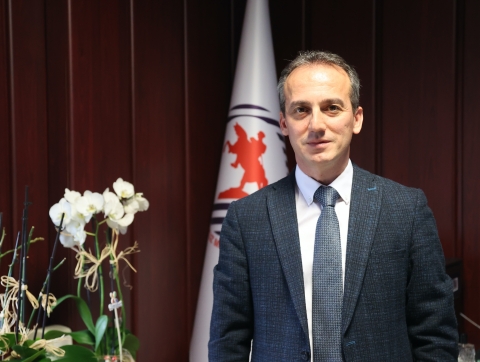
Prof. Dr. Murat Terzi, Chair of the Department of Neurology at OMU Faculty of Medicine and President of the Turkish Neurological Society, emphasized that good-quality sleep directly affects alertness and daytime functioning.
Patients who suspect that they have a sleep disorder are first evaluated at the OMU Sleep Unit and undergo a preparatory assessment. According to Prof. Dr. Terzi, this may include blood tests and other laboratory examinations, as well as an assessment of whether polysomnography, a comprehensive sleep study, is required.
Following this initial evaluation, patients who require further investigation are admitted to the sleep laboratory. Electrodes are placed on the head and body to record physiological activity throughout the night and identify potential abnormalities during sleep.
Multiple Sleep Disorders Can Be Identified
The examinations are used to investigate a range of conditions, including difficulty falling asleep, difficulty staying asleep, restless legs syndrome, sleep apnea, and other sleep disorders. Prof. Dr. Terzi noted that some patients may experience more than one sleep-related condition simultaneously.
When necessary, patients are evaluated through a multidisciplinary approach involving specialists from otorhinolaryngology (ENT), pulmonology, psychiatry, and neurology, allowing underlying conditions to be addressed collaboratively and an appropriate treatment strategy to be developed.
Highlighting the importance of healthy, restorative sleep, Prof. Dr. Terzi encouraged people who believe they may have a sleep-related problem to seek medical assessment. Patients who require laboratory investigation can undergo detailed monitoring at the unit, after which physicians use the findings to identify the nature of the sleep disorder and determine the most appropriate treatment.
Sleep Problems May Be Associated with Other Medical Conditions
Prof. Dr. Terzi explained that sleep disorders can have a variety of underlying causes. Sleep apnea, for example, may be associated with conditions involving the upper respiratory system or lungs, excess body weight, or other health problems.
Sleep disorders can also occur alongside psychiatric and neurological conditions. Terzi noted that sleep-related problems may be observed in patients with epilepsy, Parkinson’s disease, restless legs syndrome, and multiple sclerosis (MS).
These potential connections make comprehensive assessment particularly important in determining whether a sleep problem is an isolated condition or is associated with another underlying disorder.
OMU Sleep Unit Serves Around 60 Patients Each Month
The OMU Sleep Unit currently serves approximately 60 patients per month, according to Prof. Dr. Terzi.
“Patients need to stay here for a certain period, and sometimes we need to extend that period,” he said. “Some patients may require sleep laboratory monitoring for 24 hours or longer.”
Prof. Dr. Terzi emphasized the diagnostic value of dedicated sleep laboratories:
“The Sleep Unit is particularly valuable in helping us reach a diagnosis. It enables us to determine exactly what type of sleep problem a patient has.”
He also highlighted the importance of expanding access to specialized sleep services across Türkiye.
“It is therefore very important for sleep laboratories to become more widespread in Türkiye so that everyone who needs these services can access them,” he said. “At our Sleep Unit, we are working to provide this service both to our region and to patients from across Türkiye.”
Prof. Dr. Terzi added that findings from sleep laboratory testing play a central role in determining subsequent treatment.
-
 473
473 -
 439
439 -
 1,210
1,210 -
 209
209