








Three invasive species pose growing threat to agriculture in the Eastern Black Sea
 LISTEN

Three invasive species in the Eastern Black Sea region are causing significant damage by directly affecting agricultural production. The brown marmorated stink bug, which has spread widely across the region, the citrus longhorned beetle, which is locally limited but highly destructive, and the fall webworm, currently in decline due to natural enemy pressure, are creating simultaneous pressure within the same ecosystem, posing a critical challenge for both the regional economy and ecological balance.
The three invasive species active within the same ecosystem in the Eastern Black Sea region are exerting simultaneous pressure on agricultural production and natural balance. The brown marmorated stink bug, with its extensive distribution, leads to quality and yield losses in many crops, particularly hazelnuts. Damage rates increase as harvest approaches, and economic losses are directly reflected in producer income. The citrus longhorned beetle, though observed at a local scale, has a high destructive capacity; by creating galleries in tree trunks, it weakens plants and causes dieback. In areas where it is detected, quarantine measures are implemented, infected trees are removed, and the spread is contained. The fall webworm, which reached high population levels in previous years, has declined under the pressure of natural enemies. Experts note, however, that the population has not been fully eliminated and may increase again depending on climate conditions.
Authorities state that the region’s mild climate provides favorable conditions for invasive species. For this reason, control efforts must be continuous and planned rather than reactive. In the coming period, it is expected that early warning systems, pheromone traps and applications supported by biological control agents will become more widespread.
“In this region where neither summer nor winter is harsh, invasive species can easily establish and multiply”
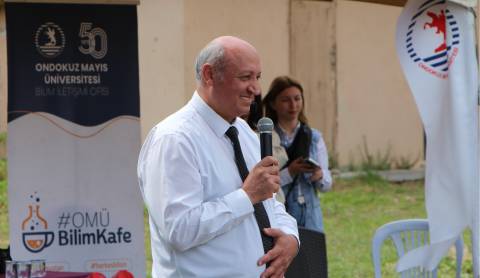
Commenting on the issue, Ondokuz Mayıs University (OMU) faculty member Assoc. Prof. Dr. Kibar Ak emphasized that the most effective method is detection and monitoring. “There are three invasive species affecting our region and also on Türkiye’s agenda: the brown marmorated stink bug, the citrus longhorned beetle, which, although localized, is highly destructive, and the fall webworm, which appeared earlier and is now under pressure from natural enemies. In addition to invasive species, the region also faces problems with invasive weeds. In particular, weeds known locally as ‘it dolahbacı’ or ‘false cucumber’ are becoming more widespread in the Eastern Black Sea region. The main reason is that the region has a climate suitable for invasive species to survive and reproduce. In this area, where summers and winters are not severe, once invasive species are introduced, they can easily establish and multiply,” he said.
“The brown marmorated stink bug is currently the most prominent invasive species in Türkiye”
Assoc. Prof. Dr. Kibar Ak concluded his remarks as follows: “The species most prominent in Türkiye at the moment is the brown marmorated stink bug. The citrus longhorned beetle follows as a locally significant threat. The fall webworm, on the other hand, has largely lost its impact thanks to natural enemy pressure, which is a very positive development. This situation is an important example demonstrating how effective biological control methods can be. As with all invasive species, the most effective control method is detection and monitoring. The order of intervention should be biological control first, followed by eradication and cultural control, and chemical control as a last resort.”
-
 563
563 -
 1,353
1,353 -
 454
454 -
 550
550