







OMU expert urges families to guide children’s emotions in a digital age
 LISTEN

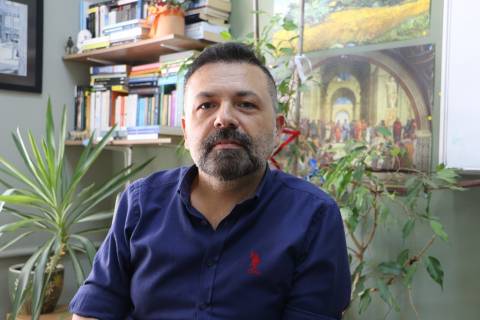
Prof. Dr. Hatice Kumcağız, Head of the Department of Guidance and Psychological Counseling at the Faculty of Education of Ondokuz Mayıs University (OMU), stated that families play a critical role in children’s emotional development and that the school climate is also an important factor in this process. She also emphasized that families should communicate deeply with their children and help them express their emotions.
Prof. Dr. Kumcağız said:
“Aggressive behaviors in children emerge as a result of the combination of many negative factors. Among psychological factors, social isolation, depression, and intense anger can be influential. Children who feel different and do not receive the attention they expect from their environment may develop deep resentment and a strong desire for revenge over time. Similarly, another important factor to consider is peer bullying. A child who is ‘invisible’ at school or constantly exposed to humiliating behaviors may transition from the role of ‘victim’ to that of ‘punisher.’
The child’s first safe haven is the family. The family is the first gateway through which the child opens to the world. A child learns how to control anger by observing their parents. If a parent shouts when angry, the child concludes that ‘shouting is a way to solve problems.’ Parental attitudes also play a significant role in shaping children’s behavior. Overly strict (authoritarian) or overly permissive (neglectful) parenting styles may trigger violence.”
“The first place a child learns to manage anger is the family”
Emphasizing that the healthiest approach is a democratic parenting style where boundaries are clear but children’s emotions are heard, Prof. Dr. Kumcağız stated:
“It is the responsibility of families to monitor the games children play and the videos they watch, and to protect them from content that normalizes violence. Unconditional love provided by parents is crucial for the development of self-confidence. Children who feel valued and have high self-esteem are less likely to feel the need to prove themselves by harming others.
The family is the first place where a child can calm or control their anger. However, emotional neglect and a lack of parental attention to the child’s digital world can pave the way for negative behaviors. The school climate also plays a significant role in a child’s development. Focusing solely on academic success at school while ignoring students’ socio-emotional needs may increase risks.”
Measures to be taken by families and schools
Addressing the precautions that families and schools should take, Prof. Dr. Kumcağız said:
“Children first model their parents. In this context, they learn conflict resolution skills by observing them. Parents should remain calm in moments of stress and anger and demonstrate that problems should be solved through communication, not shouting or violence.
Digital supervision and media literacy are also crucial in a child’s development. Video games that normalize violence and uncontrolled social media content can weaken empathy. Parents should engage with their children by analyzing content together.
Emotional expression should be encouraged at home.
As for schools, administrations must take necessary measures against peer bullying and not treat it as harmless childhood behavior. While protecting the victim, a rehabilitation-oriented approach should be adopted for the child displaying bullying behavior. Schools should focus not only on academic success but also on students’ social, emotional, and personal development. Supporting these three areas alongside academic achievement forms the foundation of raising healthy individuals.
Children should be directed toward sports and artistic activities that channel their energy positively. Schools should closely monitor students who are silent, isolated, excluded, frequently absent, or show sudden behavioral changes, and these students should be followed as a risk group by counseling services.
Schools can also establish confidential reporting boxes or digital platforms where students can report threatening situations without fear of being labeled as ‘informants.’”
-
 827
827 -
 436
436 -
 549
549 -
 537
537