







OMU Becomes a Principal Organizer of the 8th International Congress on Biosciences and Biomedical Engineering (ICBME 2026)
 LISTEN

As a principal organizer of ICBME 2026, OMU will help bring together leading researchers from around the world to advance collaboration in biosciences, biotechnology, environmental science, and biomedical research.
Ondokuz Mayıs University (OMU) is serving as one of the principal organizers of the 8th International Congress on Biosciences and Biomedical Engineering (ICBME 2026), which will be held in Hat Yai, Thailand, from 26 to 28 August 2026.
Held under the theme "Innovative Biosciences and Biomedical Approaches for a Sustainable Future," the congress aims to foster innovative and sustainable solutions to current and emerging challenges in health, environmental science, and biotechnology.
Organized under the leadership of the Department of Biosciences, Universiti Teknologi Malaysia (UTM), ICBME 2026 serves as an international academic platform bringing together distinguished universities and researchers from Southeast Asia, Europe, and the Middle East. Alongside UTM, Ondokuz Mayıs University is one of the congress's principal organizing institutions.
OMU Academics Assume Key Leadership Roles
OMU faculty members hold important positions within the congress's organizational structure.
Prof. Dr. Hasan Murat Aksoy, faculty member in the Department of Plant Protection at the Faculty of Agriculture, serves as Co-Chairperson of the congress's Executive Committee, the event's highest governing body.
OMU's role as a principal organizer, together with the participation of its academics on the congress's executive and scientific committees, further strengthens the University's international visibility and institutional partnerships in the fields of biosciences, agricultural biotechnology, and plant protection.
A Global Platform for Scientific Collaboration
ICBME 2026 will bring together researchers, academics, and graduate students working in biosciences, biomedical sciences, health sciences, environmental sciences, and biotechnology.
The program will feature both in-person and virtual scientific sessions, including an opening ceremony, keynote and invited lectures, parallel technical sessions, inter-institutional collaboration meetings, and cultural activities.
Beyond sharing research findings, the congress seeks to promote long-term international academic partnerships, foster collaborative research projects, and strengthen interdisciplinary cooperation among universities worldwide.
Further information is available on the congress's official website. Selected full papers presented at the congress and successfully completing peer review are planned for publication in Scopus-indexed international academic journals.
A Decade of International Scientific Excellence
First held at Universiti Teknologi Malaysia in 2016, ICBME has since been organized seven times across Malaysia, Indonesia, and other countries.
Hosted in major academic centers including Bali, Kuantan, Kuala Lumpur, and Malang, the congress also successfully continued in an online format during the COVID-19 pandemic, maintaining broad international participation.
Previous editions addressed topics including sustainability, biosciences, medical technologies, nanotechnology, post-pandemic scientific solutions, the microbiome, and global health.
ICBME 2026 marks the eighth edition of the congress and builds upon a decade of scientific and institutional collaboration.
Strengthening the Strategic Partnership Between OMU and UTM
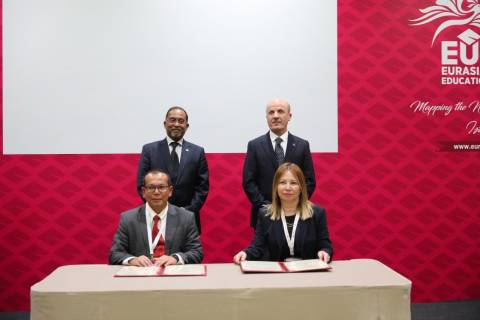
OMU's role as a principal organizer reflects the growing strategic partnership between Ondokuz Mayıs University and Universiti Teknologi Malaysia, which is supported by a formal Memorandum of Understanding (MoU) between the two institutions.
Through this partnership, the universities are jointly conducting research projects, producing scientific publications, promoting researcher mobility, facilitating reciprocal academic visits, and preparing new international research initiatives.
Their shared leadership in organizing ICBME 2026 represents one of the most tangible outcomes of this collaboration.
Looking ahead, both institutions aim to further expand cooperation through joint research projects, scholarly publications, and academic exchanges across biosciences, agricultural biotechnology, environmental sciences, health sciences, and related disciplines, transforming their collaboration into a long-term strategic international university partnership.
-
 232
232 -
 666
666 -
 492
492 -
 1,153
1,153